Jon Flint

Short Game Golf Instruction

If you want to break 90, break 80, or compete at a higher level, your short game is the fastest path to lower scores. Full swings get attention — but scoring happens around the greens.

Professional short game golf instruction focuses on the shots that matter most: wedges from 30–100 yards, tight lies around the green, bunker play, and pressure putts. When your wedge distances are precise and your chipping is predictable, confidence goes up — and scores come down.

Whether you’re a competitive player or a serious recreational golfer in the greater Philadelphia and Montgomery County area, short game development is the foundation of consistent scoring.

short game golf instruction

Most golfers practice their driver and irons more than their scoring shots. That’s backwards.

Scoring optimization golf training focuses on:

  • Distance control with wedges
  • Clean contact on chips and pitches
  • Trajectory management
  • Spin control and rollout prediction
  • Decision-making under pressure
  • Converting up-and-down opportunities

If you struggle to break 90, it’s often because of missed greens and wasted shots around them. If you’re trying to break 80, it’s usually about tightening dispersion inside 100 yards and eliminating three-putts.

The difference between good golfers and consistent scorers is wedge control.

Our wedge game lessons are built around measurable, repeatable performance from key scoring distances:

  • 30–50 yards
  • 50–75 yards
  • 75–100 yards
  • Greenside specialty shots

You’ll develop:

  • A structured wedge distance matrix
  • Reliable swing lengths and feels
  • Improved spin consistency
  • Better trajectory control
  • Shot selection awareness

Instead of guessing yardages or “feeling it out,” you’ll know exactly how far each motion travels — and why.

For competitive players, this is where tournament rounds are won.

Short game golf lessons

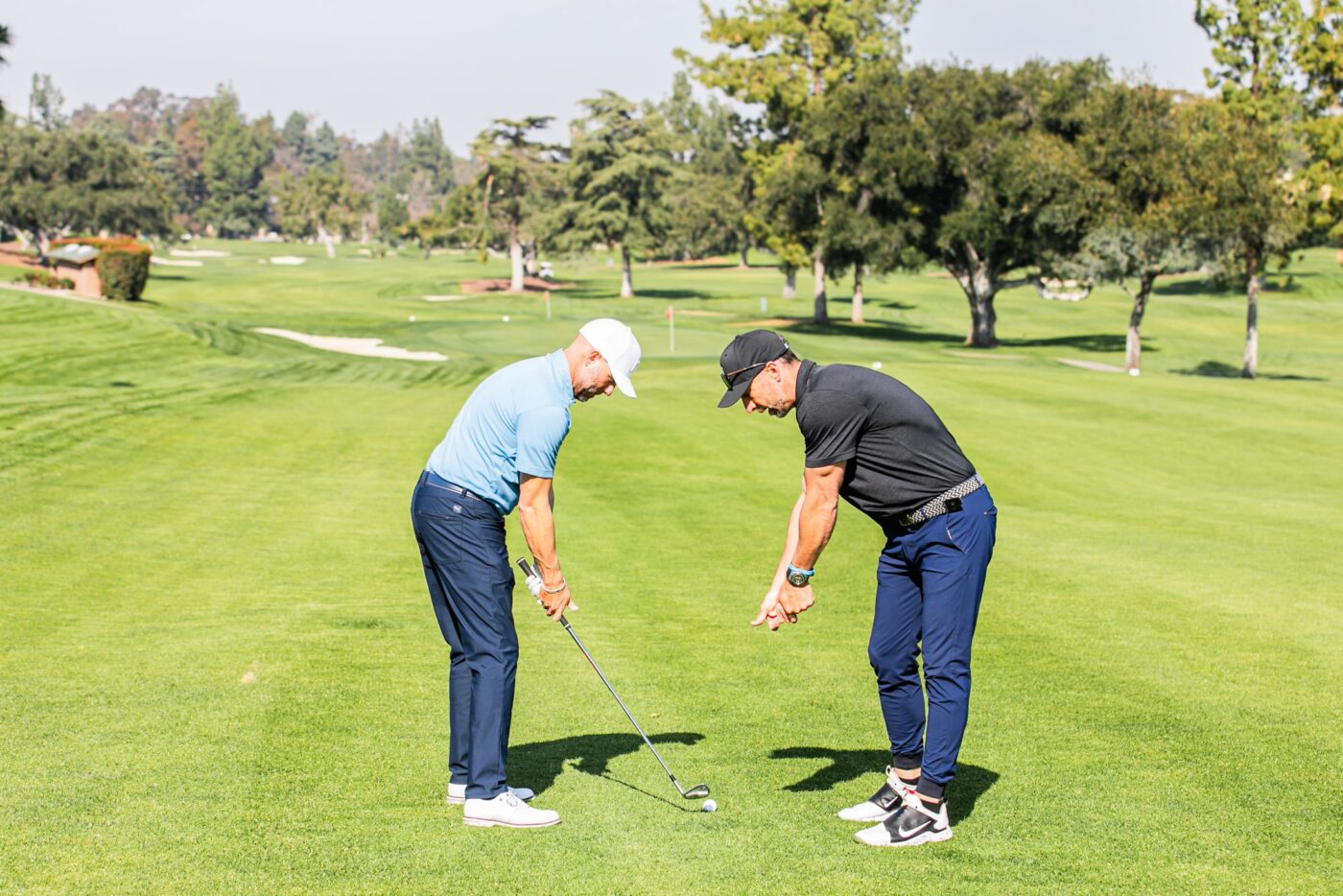
Chipping and Pitching Coach: Technique That Holds Up Under Pressure

Many golfers rely on compensations around the green. Under pressure, those compensations break down.

Working with a dedicated chipping and pitching coach ensures:

  • Proper low-point control
  • Efficient bounce usage
  • Solid contact from tight lies
  • Consistent strike from rough
  • Reliable bunker technique

We simplify technique so it holds up when it matters most.

You’ll learn how to:

  • Control landing spots
  • Predict rollout
  • Manage uphill and downhill lies
  • Adapt to different turf conditions

The goal is not just “getting it close.”
The goal is turning missed greens into pars.

Competitive Short Game Instruction

Competitive players need more than basic technique — they need structure and accountability.

Competitive short game instruction emphasizes:

  • Up-and-down conversion tracking
  • Pressure simulations
  • Tournament-style practice
  • Strategic decision-making
  • Advanced shot selection

For juniors preparing for high school or college golf — and adults competing in amateur events — the short game is often the separating factor.

You’ll train in a way that transfers directly to competition. Every drill has purpose. Every rep builds scoring confidence.

Structured Practice That Transfers to the Course

Random practice does not produce consistent results.

Your short game training will include:

By integrating technical feedback with measurable data, improvement becomes clear and repeatable.

If you’re serious about lowering scores in the Montgomery County and Philadelphia region, structured short game development is non-negotiable.

Integrating Technology for Precision Feedback

  • Short game improvement isn’t guesswork.

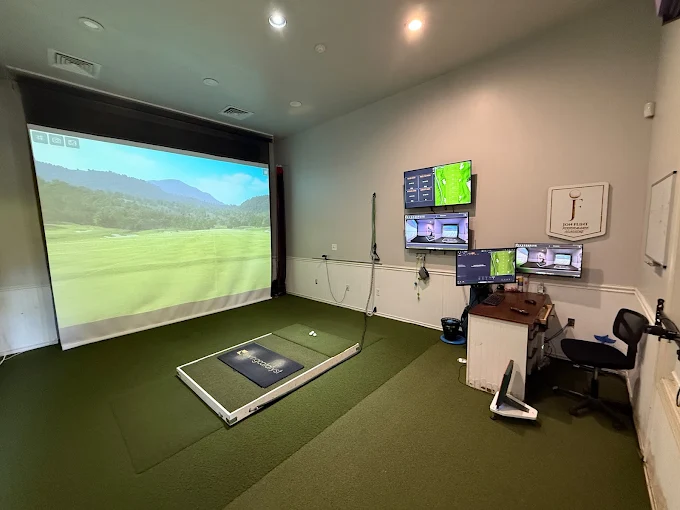
    For players who want deeper performance insight, short game training can integrate launch monitor data and movement analysis to refine strike quality, trajectory, and spin control.

    If you’re interested in advanced data-driven development, you can also explore:

    Short game instruction works best when it’s part of a complete scoring system.

indoor golf instruction in Hatboro
  • Golfers stuck in the 85–95 scoring range
  • Players trying to break 80 consistently
  • Competitive juniors building tournament readiness
  • Amateur competitors refining scoring control
  • Golfers frustrated with inconsistent wedge distances

If you miss greens and struggle to save par — this is your highest ROI area of improvement.

Book Short Game Golf Instruction

Lower scores aren’t accidental.

They’re built through precise wedge control, reliable contact, smart strategy, and structured repetition.

If you’re ready to take ownership of your scoring zone and finally break 90 or 80 with confidence, it’s time to commit to professional short game golf instruction.

Frequently Asked Questions – short game golf instruction

Short game instruction covers the full scoring zone: wedge shots from 30–100 yards, chipping and pitching from various lies, bunker play, and pressure putting. The focus is on building reliable technique, distance control, and decision-making for the shots that directly impact your score.

Most scoring opportunities are lost within 100 yards of the green. Wedge game lessons give you a structured distance matrix so you know exactly how far each swing length travels, reducing guesswork and eliminating wasted strokes around the greens.

Not at all. While competitive players benefit from tournament-focused drills and pressure simulations, recreational golfers stuck in the 85–95 range often see the fastest score improvements through short game development. It’s the highest ROI area for almost any golfer.

Sessions are built around defined performance benchmarks, shot pattern tracking, and competitive scoring games rather than random repetition. By combining technical feedback with measurable data, you develop consistency that holds up under real on-course conditions.

Contact

Email: jflintgolf@gmail.com

Phone: 814.777.2242 – 267 317 8864

Commonwealth National Golf Club
250 Babylon Road,
Horsham PA 19044